The decision should not start with “which software should we buy?” It should start with “which part of the operation do we need to control, integrate or make visible?” In manufacturing, a generic tool may fall short when it must coexist with PLCs, databases, legacy systems, quality logic and real production windows.
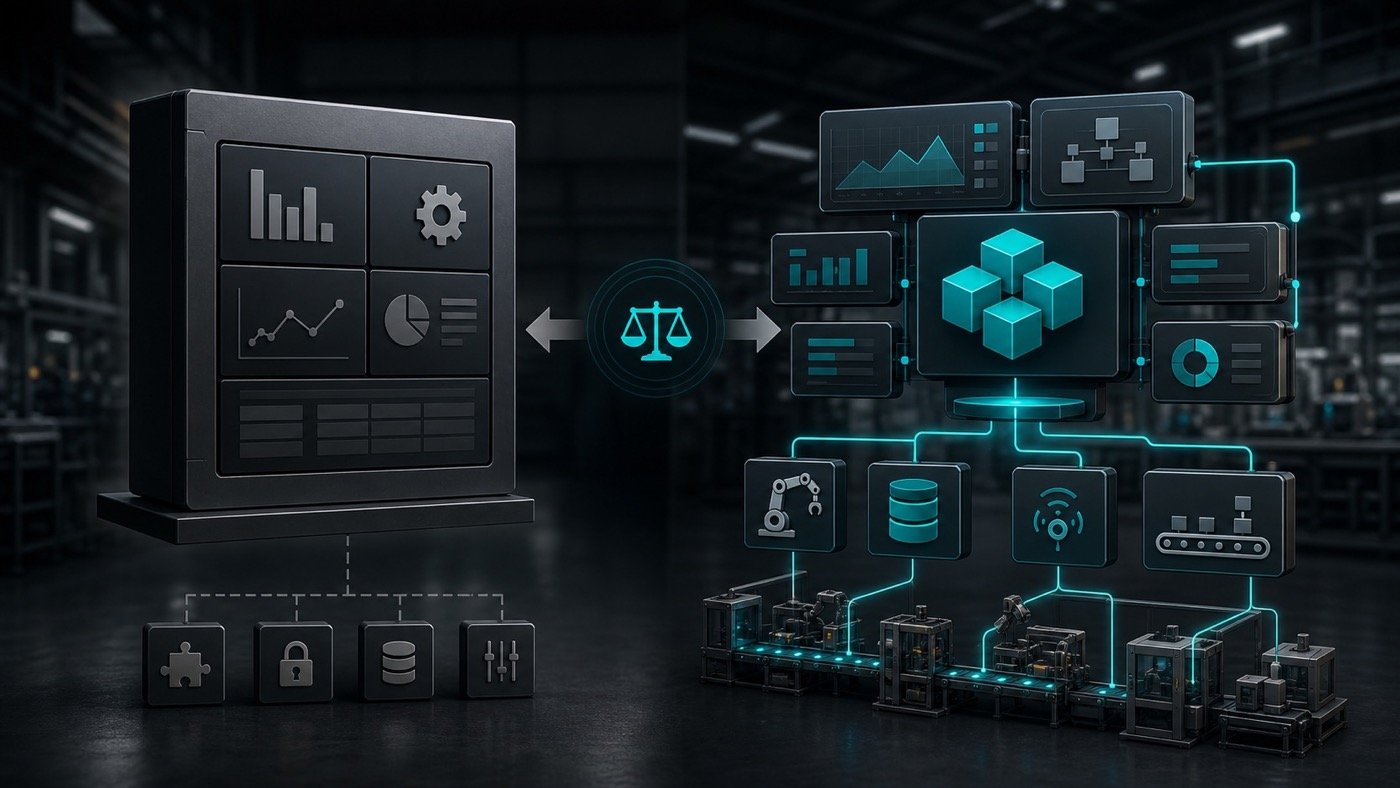
The key difference: standard process vs specific operation
Commercial software is usually designed to cover common needs. That can be enough for administration, standard reporting or processes with little variation. Custom software is designed around the real logic of the plant.
In industrial software, that difference matters because the application rarely lives alone. It often interacts with equipment, production users, databases, legacy services and operational decisions in real or near-real time.
When commercial software makes sense
- The process is standard and does not require many proprietary rules.
- The operation can adapt to the workflow of the tool.
- Integration with equipment or internal systems is minimal.
- The main goal is to record, report or manage general information.
- The cost of customization would be higher than the operational benefit.
When custom industrial software makes sense
A custom solution becomes valuable when commercial software forces too many workarounds or leaves critical parts of the process uncovered.
- The application must connect PLCs, sensors, databases, APIs or legacy systems.
- The system must preserve specific operational logic or quality rules.
- The process cannot stop if the software fails.
- Manual workflows exist because the current tool does not match plant reality.
- The operation needs better diagnostics, traceability or support detail.
Integrations that often change the decision
In industrial environments, integration is often where a generic platform stops being enough. If the solution must read or write PLC data, consume SQL Server information, communicate with RPC services, generate structured logs or coordinate with quality systems, the team should validate whether the commercial platform truly supports that context.
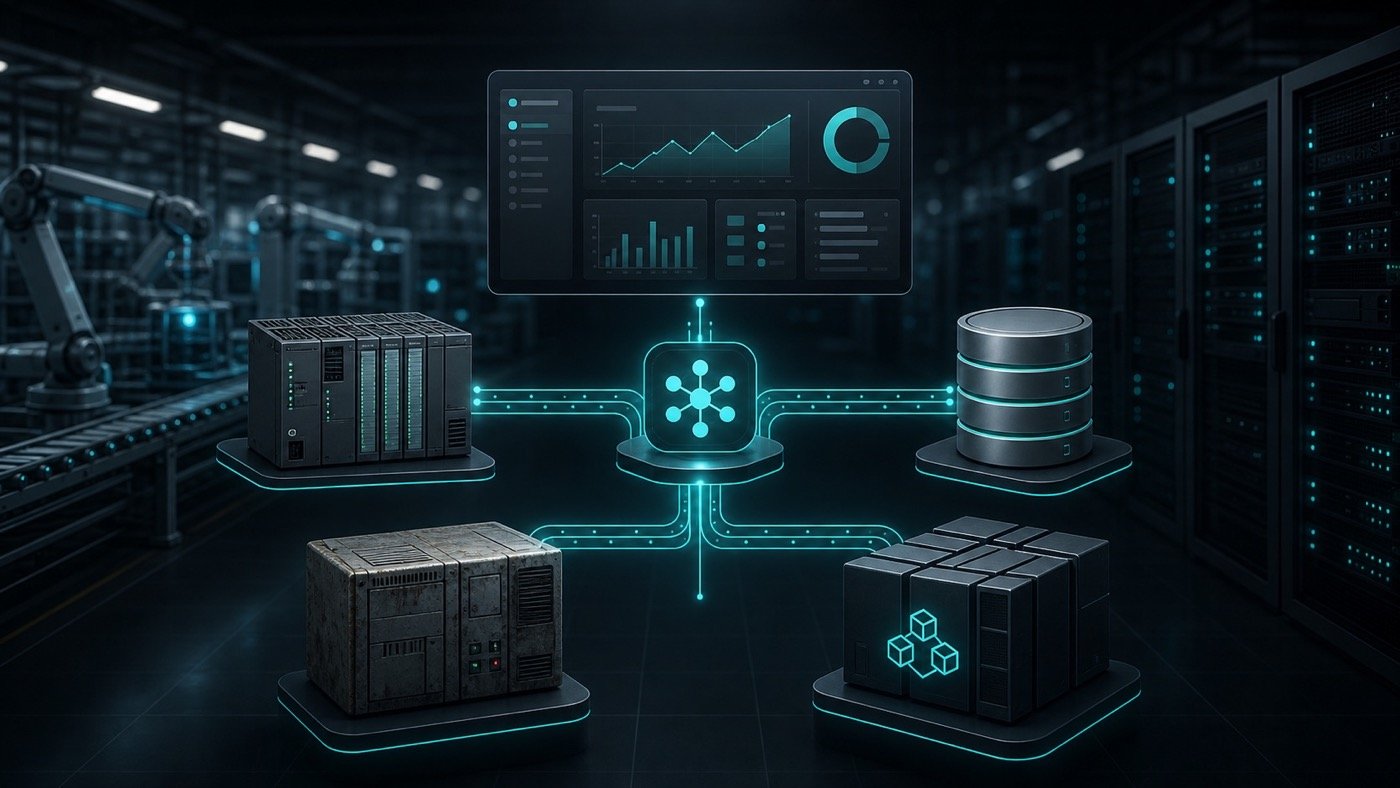
In a critical palletizing line, a legacy application was replaced with a WPF/.NET solution connected to SQL Server, RPC services, SQLite and Allen-Bradley PLCs. The value was not only a modern interface, but preserving operational logic and stabilizing communications.
View modernization case study ↗Decision checklist
- Can the process adapt to a standard tool without affecting production?
- Which systems, equipment or databases must be integrated?
- Which operational logic is unique to the plant?
- What happens if the software stops during operation?
- What level of diagnostics, traceability and support is required?
- Can the project start by module or through a controlled first phase?
Does your process no longer fit a generic tool?
Axyz can help evaluate whether to configure a commercial solution, modernize existing software or build custom industrial software.
FAQ
Is custom software always better?
No. If the process is standard and integration is simple, a commercial solution may be faster and more cost-effective.
Does custom development mean replacing everything?
Not necessarily. It can start by module, specific integration or gradual modernization of an existing application.
What makes industrial projects different?
Production criticality, equipment communication, process logic, plant data and the need for reliable support.