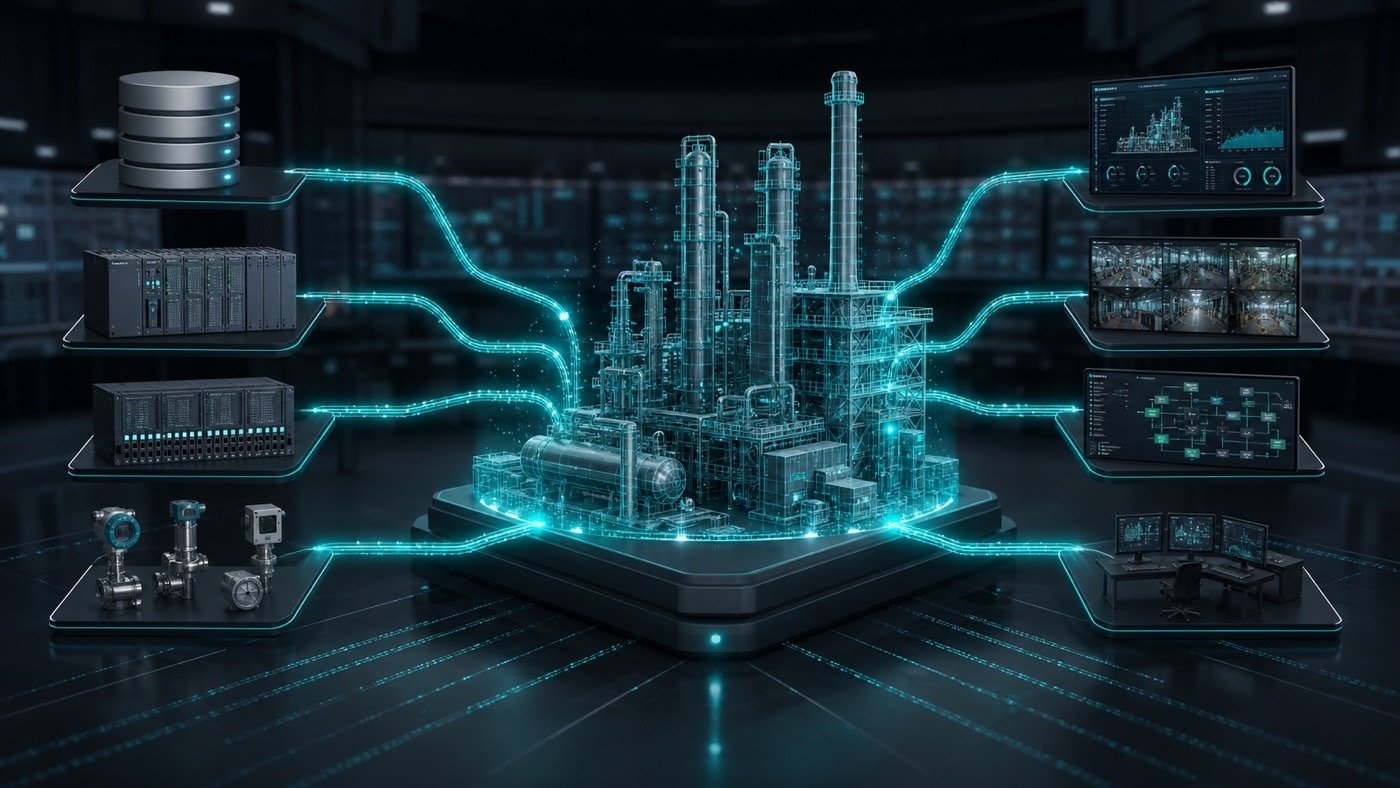
The question should not be “what data can we display?”, but “what data makes the 3D model help people understand operations better?”. That difference prevents overloaded dashboards and brings the digital twin closer to real decisions.
First define how it will be used
Data requirements change depending on the use case. A digital twin for visitor reception may prioritize visual storytelling and representative states. One for operational monitoring needs signals, events, materials and timing closer to the actual process.
- Monitoring: equipment states, movements, alarms, availability and material flow.
- Training: sequences, scenarios, normal conditions and typical failures.
- Technical sales or reception: plant view, main processes, capabilities and visual walkthrough.
- Diagnostics: events, timing, history, area correlation and failure evidence.
Data types commonly integrated
An industrial digital twin can connect information from several plant layers. Not all of them are needed in the first scope, but mapping them helps decide priorities.
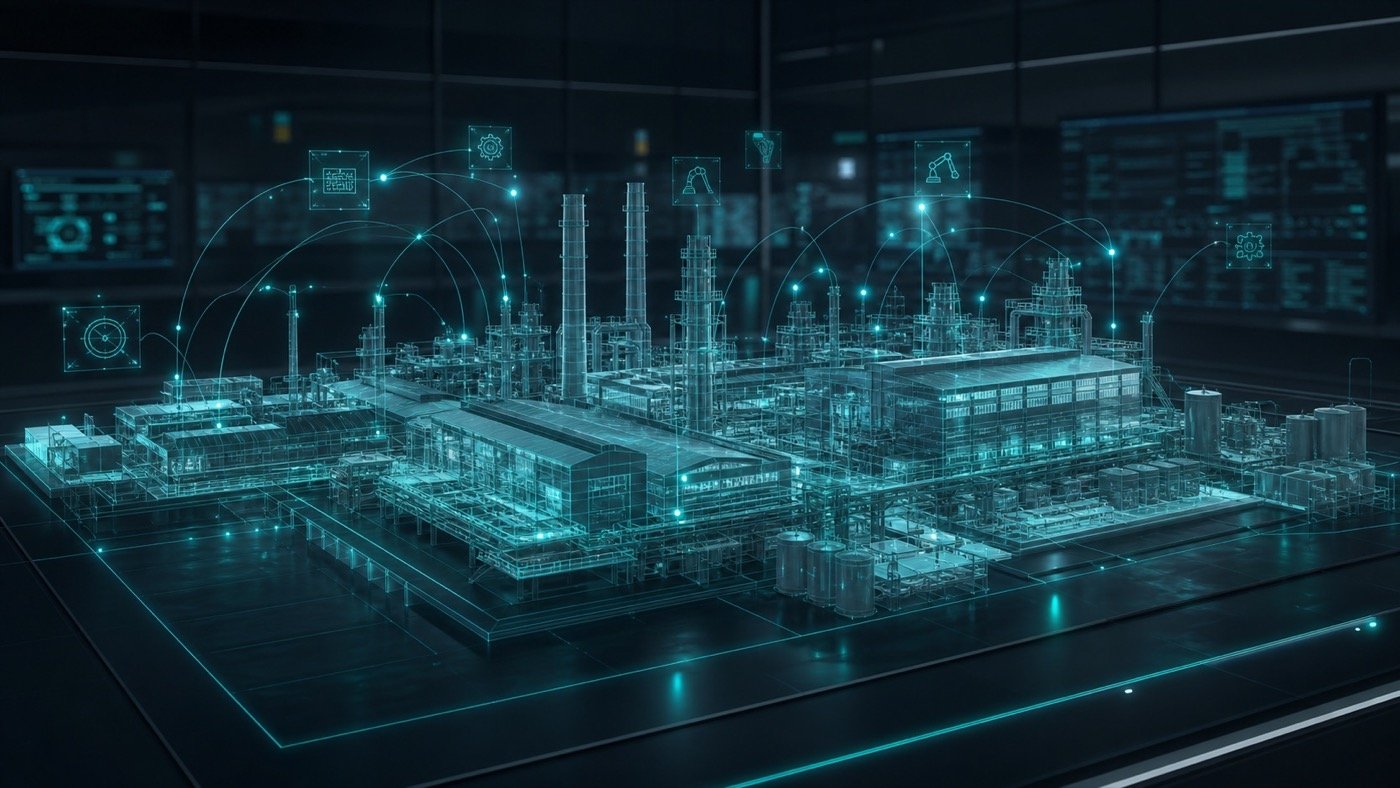
- Equipment: running, stopped, fault, manual mode, automatic mode, speed or availability.
- Materials: location, quantity, lot, weight, type, destination or process progress.
- Movement: cranes, conveyors, carts, robots, vehicles, routes and positions.
- Quality: inspections, rejects, alerts, process parameters and release decisions.
- Inventory: warehouses, capacity, occupancy, inbound, outbound and finished goods.
- Events: alarms, state changes, communication errors and cycle times.
Not everything has to be real time
One common mistake is assuming every data point must update live. That can make the project more expensive and the architecture more complex without creating proportional value.
Classify data by frequency: real time, near real time, periodic update, historical or simulated. For example, a crane position may need frequent updates, while a technical specification or warehouse capacity may rarely change.
If a data point does not change a decision, alert or important explanation, it probably should not be in the first scope. A digital twin should clarify, not become another overloaded screen.
View digital twin service ↗What the data architecture should protect
The architecture should protect both visual performance and data reliability. A 3D environment can degrade if it tries to process information without filters, structure or a well-defined integration layer.
- Separate data sources, business rules and the visual layer.
- Define names and associations between physical assets and 3D objects.
- Establish what happens when data is late, missing or invalid.
- Log relevant events for support and diagnostics.
- Optimize the 3D scene so visualization does not compete with integration.
Recommended next step
Before building, create a short inventory: goal, users, available sources, update frequency, assets to represent and decisions the digital twin should support.
With that map, you can define a first scope that is small but valuable: one area, one material flow, one equipment family or a full plant experience if the goal truly justifies it.
Do your current data sources support a digital twin?
Axyz can help review sources, architecture and first technical scope for a 3D application connected to real operations.
Frequently asked questions
What is the best data source to start with?
The best source is the one that supports the first scope objective. It may be a database, Redis, APIs, PLCs, files or existing plant systems.
Can we start without every data source ready?
Yes, as long as real data, simulated data and assumptions are clearly separated. The important part is not presenting conceptual behavior as operational behavior.
Does the 3D model need full detail?
Not always. Detail level should balance visual clarity, performance and the digital twin's purpose.