The right question is not “can we build a digital twin?” It is “which decision, process or operational risk becomes clearer when the plant can be seen as a connected system?” Without that question, the project risks becoming an attractive demo with limited operational value.
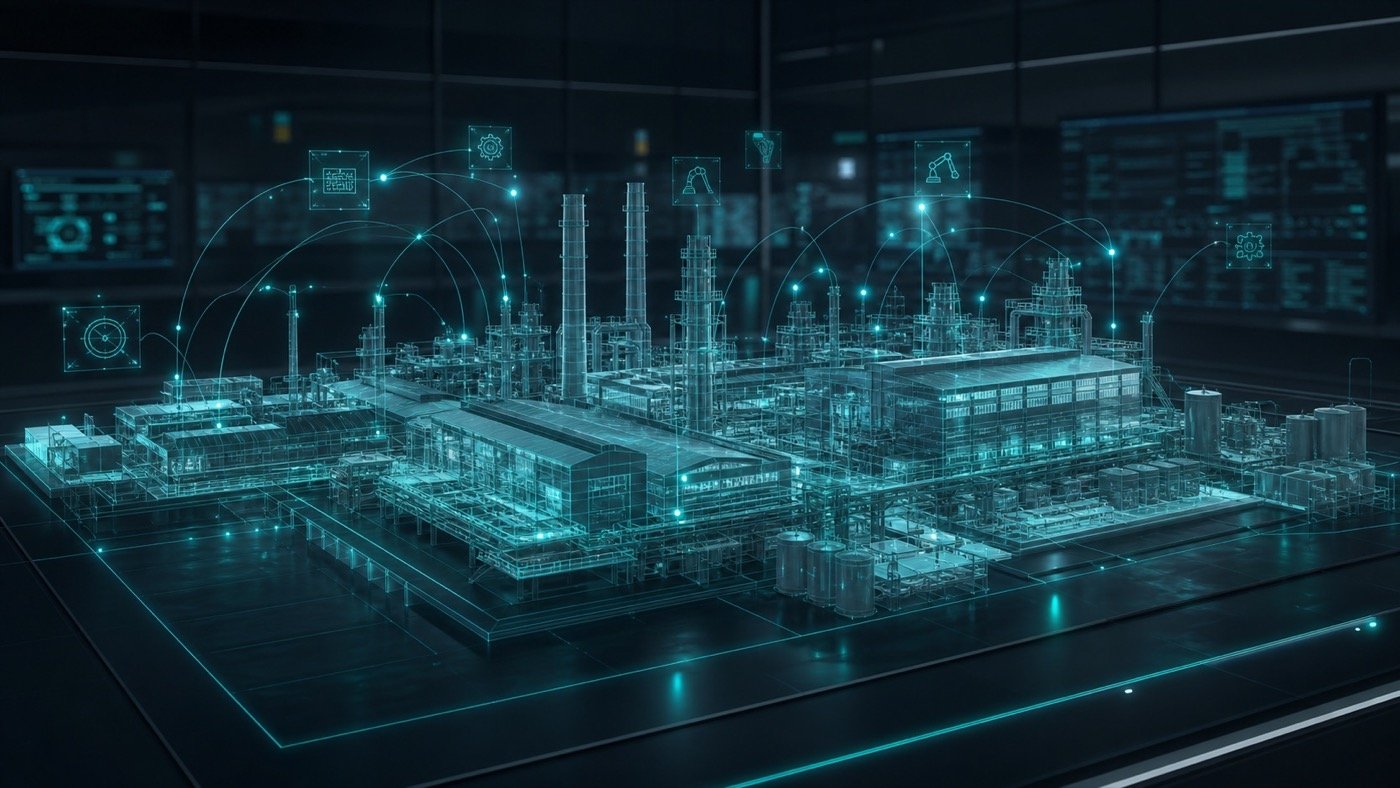
When an industrial digital twin creates real value
A digital twin usually makes sense when there is a clear need for visibility, coordination or operational explanation.
- The operation involves multiple areas, equipment, warehouses or material flows that are hard to see on one screen.
- Commercial teams, visitors or suppliers need to quickly understand how the plant works.
- The plant wants to monitor states, movements, inventory or events in a more intuitive visual context.
- Operational data exists, but it is scattered across systems, databases or disconnected interfaces.
- Training, support or incident analysis benefits from a visual representation of the process.
What data it needs to become more than a 3D model
A 3D model can communicate a lot, but operational value appears when it connects to real data. Sources may include databases, Redis, PLCs, APIs, legacy systems, cameras, quality data or inventory information.
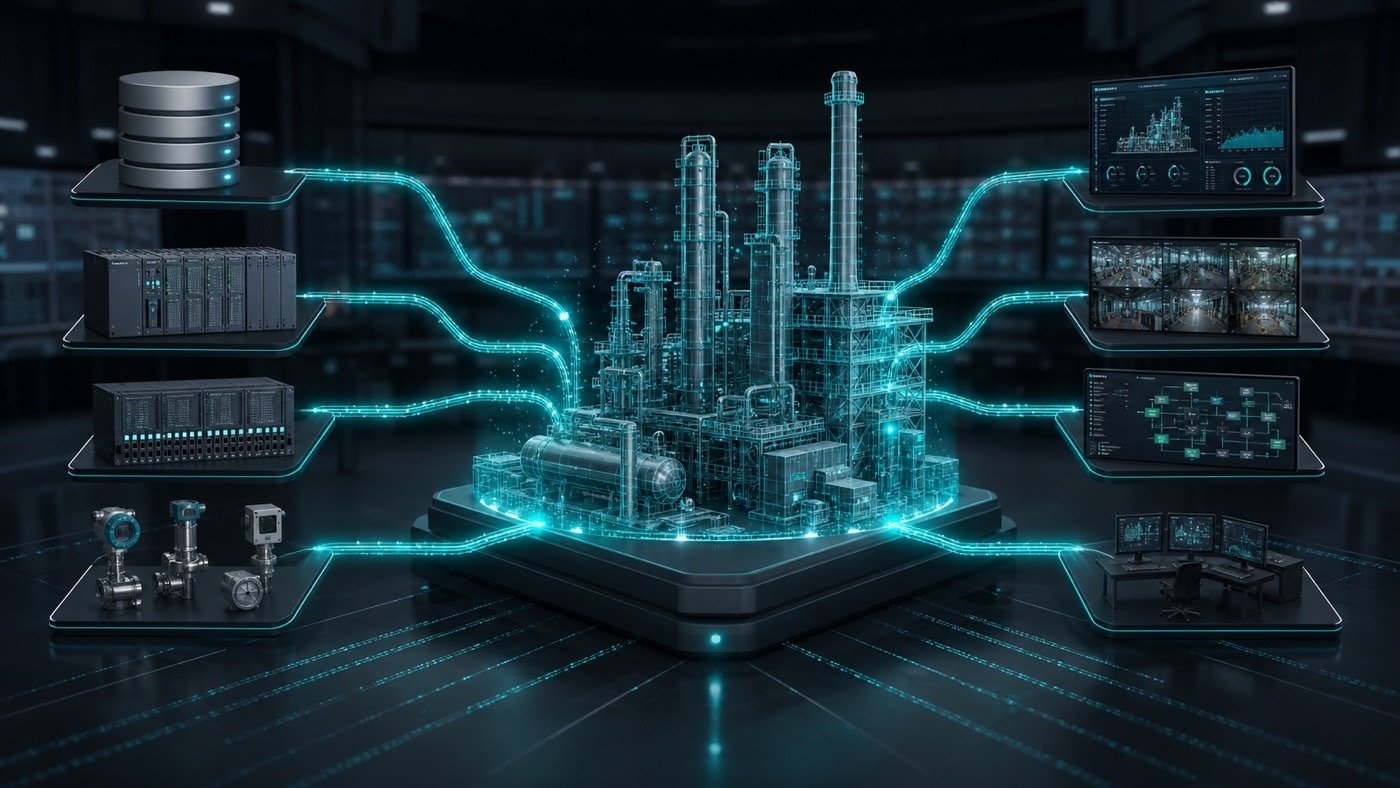
Before development, it is important to identify which data exists, how often it changes, who consumes it and how reliable it is.
How to define a first technical scope
The first scope should be small enough to build and validate, but relevant enough to prove real value.
- Define the main operational question: monitoring, technical sales, training, plant visits or diagnostics.
- Select one representative area or process, not necessarily the entire plant.
- Confirm the data sources and their availability.
- Decide the 3D detail level: conceptual, CAD-based, performance-optimized or immersive-ready.
- Define who will use it and on which device: desktop, control room, reception, tablet or immersive experience.
In a full-plant project, Axyz developed the flow from CAD-to-mesh conversion, optimization and texturing to Unity3D development, .NET libraries and communication with operational data consumed through Redis. The digital twin was used for both operational monitoring and a reception experience for visitors.
View digital twin case study ↗Common mistakes when starting
- Trying to model the whole plant before validating a priority use case.
- Underestimating 3D optimization work, especially when converting CAD into usable meshes.
- Not defining data frequency, quality and availability.
- Designing the experience without knowing who will use it and in what context.
- Measuring success by how impressive it looks instead of the operational clarity it provides.
Recommended next step
Before quoting a full digital twin, run a scope assessment: objective, users, data sources, 3D detail level, performance constraints and deployment path.
That first map helps avoid oversizing the project and clarifies whether to start with one area, one process or a full-plant experience.
Want to evaluate whether a digital twin fits your operation?
Axyz can help define the first technical scope and the data sources required.
FAQ
Does a digital twin always need real-time data?
Not always. It depends on the goal. For operational monitoring it usually matters; for technical sales, training or visits, it can start with simulated, historical or controlled data.
Do we need perfect CAD to start?
Not necessarily. CAD helps, but it usually requires conversion, cleanup, optimization and texturing. In some cases, a conceptual representation is enough for the first scope.
Should we start with the whole plant?
Only if the objective justifies it. It is often better to start with a critical area or representative flow to validate value, performance and data availability.