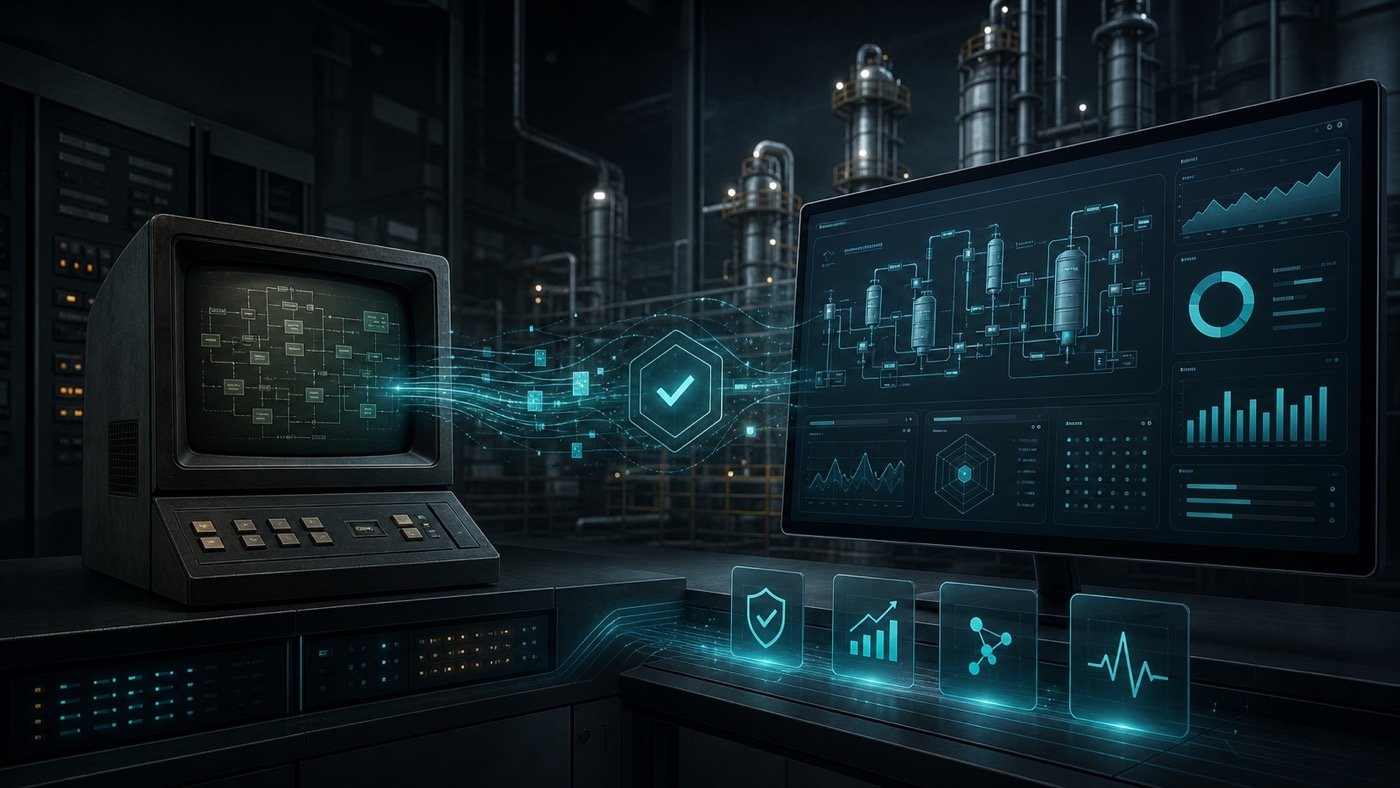
In many plants, legacy software is not just “old software.” It may contain quality rules, operating sequences, PLC communication, database connections and process logic that nobody wants to lose. The real question is not whether the application looks outdated, but whether it still supports the operation reliably.
Signals that the system has become an operational risk
An industrial system deserves a modernization assessment when failures stop being technical annoyances and start creating production impact.
- The application freezes or stops responding during operation.
- Database, PLC, RPC or external service communication fails without clear diagnostics.
- Production teams use manual workarounds to compensate for software limitations.
- Only one person knows how to maintain, install or compile the application.
- There are no structured logs, error codes or sufficient traceability.
- The technology is difficult to support, deploy or extend safely.
The hidden cost of continuing to patch
Patching can be reasonable for a while. The problem appears when every adjustment increases system fragility. In industrial environments, that fragility can mean accumulated material, rework, manual inspections, lost traceability or equipment waiting for data that never arrives.
The cost is not only development time. It is production time, operational stress and the inability to respond quickly when something fails.
Modernization does not always mean replacing everything at once
For critical systems, a big-bang replacement is often unnecessarily risky. A healthier approach is to separate responsibilities: interface, process logic, PLC communication, data access, logging and external services.
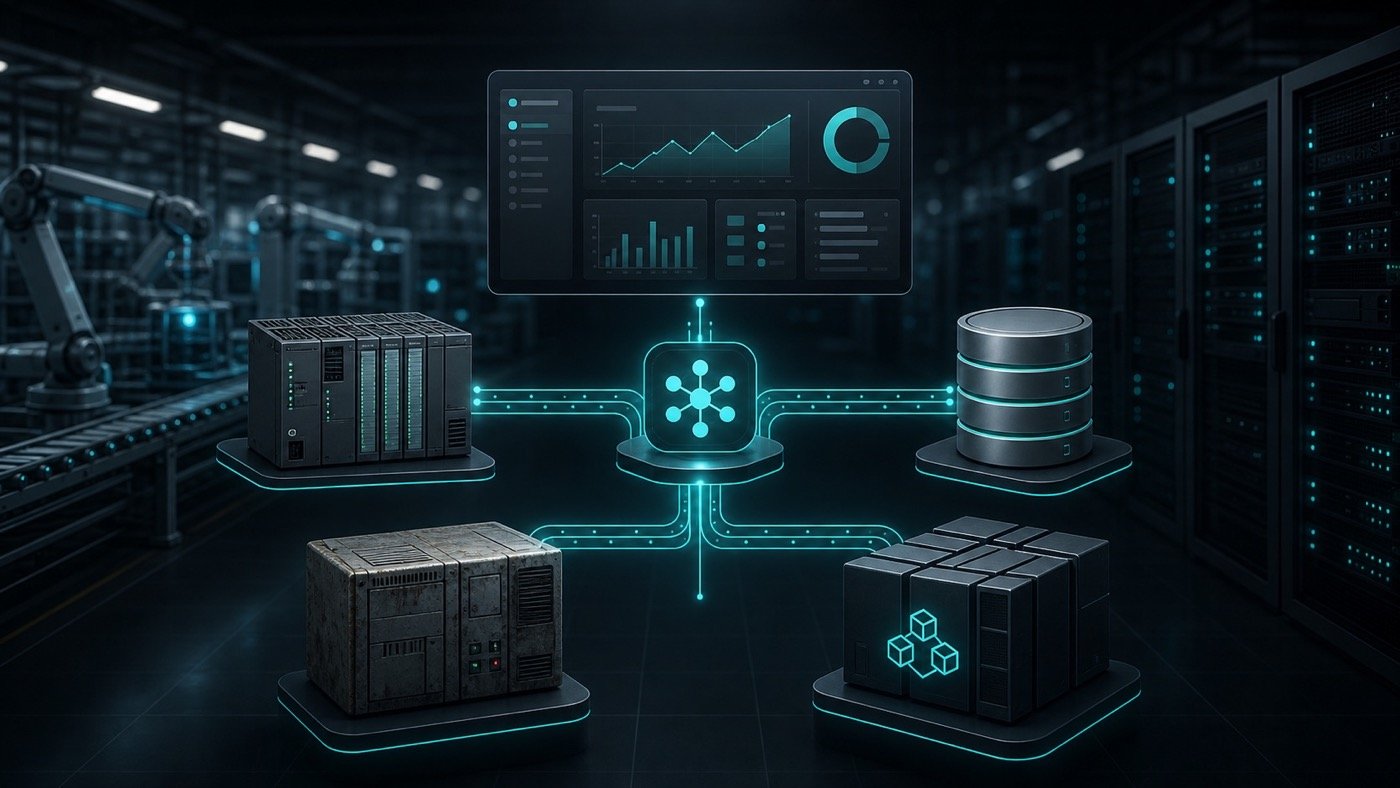
This makes it possible to test by parts, preserve useful logic, create reusable libraries and coordinate releases around real production windows.
In a critical palletizing system, a legacy application was replaced with a WPF/.NET solution connected to SQL Server, RPC services, SQLite and Allen-Bradley PLCs. The release was phased, preserving operational logic while improving diagnostics, stability and communication times.
View modernization case study ↗Technical checklist before deciding
Before modernizing, answer these questions:
- What happens in the plant if the application stops?
- Which equipment, databases and external systems depend on it?
- Which logic must be preserved exactly?
- Are there test environments, or can validation only happen during production windows?
- Which data must be read, written or preserved?
- Which errors are most frequent and how are they diagnosed today?
- How easy is it to install, back up and recover the system?
Recommended next step
If the system is critical, the first step should not be quoting a full rewrite. It should be a technical and operational assessment: dependencies, failures, logic, risks and transition windows.
From there, the team can decide whether to stabilize, modernize by module or replace the full application.
Does your operation depend on unstable software?
Axyz can help assess the current system and define a phased modernization path.
FAQ
Does every legacy industrial system need to be replaced?
No. Some systems can be stabilized or modernized by module. The decision depends on criticality, failures, dependencies and operational impact.
How can downtime risk be reduced?
Through technical discovery, representative testing, controlled release windows, phased deployment, rollback planning and structured diagnostics.
Which integrations should be reviewed?
Databases, PLCs, legacy services such as RPC, APIs, local files, quality systems, warehouse systems and any dependency that affects production.